
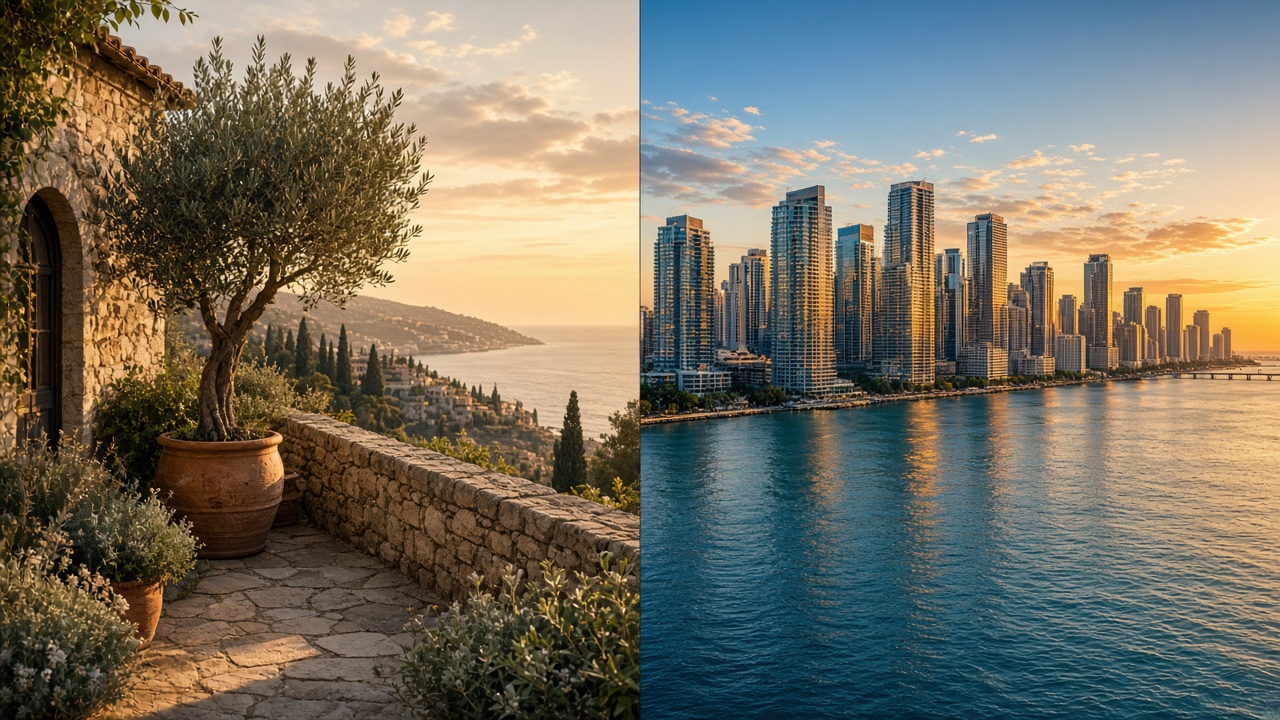
Not every Italian who buys in Miami wants to “relocate.” Many are looking for something subtler: a stable base across the ocean, a few months a year at an American pace, and a property that also remains part of their wealth strategy.
This is the logic of the second home as a lifestyle asset: not purely buy-to-let, and not necessarily a full-time relocation. A way of living between Italy and Florida, with eyes wide open on visas, taxation and day-to-day expectations.
This article is written for Italian entrepreneurs and HNW families considering Miami (or South Florida) as a second home. It is an in-depth look at conscious lifestyle choices — not a guide to returns, nor personalized legal or tax advice.
Why “lifestyle asset” and not just “investment”
Real estate conversations often focus on returns, hot neighborhoods and closing procedures. These are important topics — and InvestUSA already covers them from an educational perspective. Here the angle is different.
A lifestyle asset answers three questions at once:
- How do I want to live when I am there? (pace, neighborhood, privacy, family, remote work)
- How much time will I actually spend there? (seasons, long weekends, winter months)
- Where does it fit within my wealth? (diversification, personal use, possible rental during periods of absence)
If the only answer is “maximize cash flow,” you are thinking as a pure investor. If it is only “I want the view,” you risk underestimating costs, condominium rules and length-of-stay restrictions. The balance lies in the middle: quality of life and wealth discipline.
Living between two countries: what it means in practice
For many Italians, the ideal model looks like this:
- main base in Italy (family, business, network);
- regular periods in Miami — winter, long holidays, weeks of focused work;
- property used personally, and only secondarily rented out during empty months (where rules and licenses allow).
This is not “emigration.” It is a personal two-pole geography. It works well when length of stay, travel documents and Italian tax residency are clear before the emotional purchase of the view.
Visas and stays: the line between tourism and living
Italian citizens may, if eligible, travel to the United States under the Visa Waiver Program (VWP) for tourism or business, for stays of less than 90 days, with prior ESTA authorization. This is confirmed by the official documentation of the U.S. Embassy in Italy.
This is essential for the “between Italy and Miami” lifestyle:
- short, repeated stays as a visitor are not the same as living or working in the US on a stable basis;
- if the goal becomes residential, entrepreneurial or an extended stay, different paths are needed (a visa, since the VWP is not available for that purpose, and dedicated immigration advice).
A second home can be your refuge. On its own, it does not replace an immigration status.
Tax residency in Italy: “having a home in Miami” is not enough
Buying in Florida does not automatically “cancel” Italian tax residency. Since 2024, the rules on the residency of individuals have been updated: the Italian Revenue Agency (press release of 4 November 2024 on Circular No. 20/E, implementing Legislative Decree 209/2023) clarifies the criteria — including domicile centered on personal and family relationships, physical presence for most of the tax period, and the rebuttable-presumption value of registration in the population registry.
From a lifestyle perspective, the message is simple: planning your months between Italy and the US is not just a scheduling matter. It is also a matter of tax connection. Before building a “half here, half there” calendar, it is wise to align with a professional who knows the Italy–US framework.
Brickell, Miami Beach and Italian expectations
Miami’s pace is not that of an average European city — nor is it a brochure resort.
Brickell is dense, vertical, oriented toward business and services. Offices, high-rise condos, restaurants open late, rush-hour traffic. For those arriving from Italy with the idea of “tranquility by the sea,” it can be surprising: it is more city life than slow living.
Miami Beach (and surrounding areas) speaks a different language: beach, hospitality, tourist density, events, a more extroverted social scene. Ideal for those who want sun and movement; less ideal for those seeking absolute quiet all year round.
Between these two poles — and in South Florida’s residential neighborhoods — there are intermediate styles. The choice is not merely aesthetic: it affects noise, condominium rental rules, the type of neighbors, and travel times to the airport and international schools.
What Italians often misunderstand (no judgment)
- “It’s like a beach house in Italy.” The climate helps, but condominium management, insurance, hurricane season and service culture are a different world.
- “If I’m not there, I’ll just rent it out.” That depends on the building’s rules, local licenses and the property’s profile. It is not automatic.
- “Miami is just parties and yachts.” There is also a Miami of entrepreneurs, families and remote workers who use the city as a hub to Latin America and the East Coast. A serious lifestyle chooses the part of Miami it needs — not the one in the reels.
Second home vs pure buy-to-let: two mindsets
| Lifestyle asset (second home) | Pure buy-to-let | |
|---|---|---|
| Priority | Personal use + quality of life | Occupancy and income |
| Choice of area | Where you want to be | Where it rents best (at equal risk) |
| Furnishing and layout | Designed for you / your family | Designed for turnover and maintenance |
| Calendar | Personal blocks in the schedule | Maximize available nights |
| Success | “I enjoy being there” + solid wealth | Management metrics and cash flow |
Neither is “right.” The problem arises when you buy with a lifestyle mindset and manage with brochure-level return expectations — or vice versa.
A mature approach is often hybrid and honest: priority on winter or family use; rental only in the remaining months and only if rules and numbers (verified, not invented) allow it; no obligation to “generate returns” to justify the pleasure of being there.
Florida and the soft context of 2025–2026
A structural, evergreen and verifiable fact: Florida does not levy a personal income tax at the state level. This is explicitly confirmed by the Florida Department of Revenue in its official FAQ, also with reference to the Florida Constitution.
For an Italian who maintains tax residency in Italy, this does not mean “zero taxes” overall: US federal taxes (where applicable), local property taxes, any obligations in Italy and reporting rules still apply. But it explains why South Florida has for years remained a lifestyle and wealth magnet for people coming from high-tax jurisdictions — without turning the topic into promises of personalized savings.
For those writing about lifestyle, the 2025–2026 context is mainly this: Miami continues to be perceived as an international, bilingual city with a large European and Latin community. The heat, the density and the cost of urban living remain part of the package — not footnotes.
How to set up the project without romanticism
A grown-up checklist, before the “love at first sight” visit:
- Goal written in one sentence — “Second home for 8–12 weeks/year + rental option in months X,” not “Miami because Miami.”
- Stay profile — VWP/ESTA and duration limits, or a visa path if more is needed. Institutional source: U.S. Embassy in Italy / VWP.
- Tax residency and family — Where are your personal centers of interest? Alignment with an Italy–US accountant (Revenue Agency Circular 20/E/2024).
- Neighborhood and pace — Try Brickell on a weekday and Miami Beach on a weekend: they are two different Miamis.
- Condominium rules — Pets, minimum rental terms, renovations, HOA: read them before the emotional offer.
- Use vs income — Decide the priority. If it is lifestyle, don’t force a short-term rental model where it is not allowed or not consistent.
- Local team — Real estate, tax and (if needed) immigration advice at the same table, not in silos.
The role of an on-the-ground partner
Living between Italy and Miami becomes sustainable when someone knows both worlds: Italian expectations and American mechanics. InvestUSA supports Italian investors in real estate, taxation and relocation, with an operational base in Brickell (Miami) and the Cosmore partner network.
You don’t need to decide today. What you need is an honest conversation: how much time you really want to spend there, and what kind of life you want when you land at MIA.
If you are considering a second home in Miami as a lifestyle asset — not just as a line in your portfolio — book a consultation or explore the services on InvestUSA.
Conclusion
For many Italians, a second home in Miami is neither an escape nor mere speculation. It is a contemporary way of inhabiting two horizons: roots in Italy, light and a hub in Florida.
It works when the pace of the neighborhood matches your character, when stays comply with entry rules, when taxation is planned and when the property is chosen for how you live in it — not just for how it would “perform” on an Excel sheet.
Serious lifestyle, in other words: desire with discipline.
Sources
- Florida Department of Revenue — FAQ: Do I have to file a personal income tax return in Florida? — floridarevenue.com
- U.S. Embassy & Consulates in Italy — Visa Waiver Program — it.usembassy.gov
- U.S. Department of State — Visa Waiver Program — travel.state.gov
- Agenzia delle Entrate (Italian Revenue Agency) — Press release of 4 November 2024 (Circular 20/E, tax residency) — agenziaentrate.gov.it
- InvestUSA — Homepage, Services, Contact
- InvestUSA — Blog and Guides